Charting cumulative table game patterns into elite tier access through synchronized mobile activity feeds across borderless networks
Written by Mia Lehmann · Aug 5, 2026

Charting cumulative table game patterns into elite tier access through synchronized mobile activity feeds across borderless networks
Data from multiple jurisdictions shows that mobile applications now aggregate cumulative performance metrics from table games such as blackjack, baccarat and roulette to determine eligibility for elite loyalty tiers, and operators synchronize these feeds through cloud-based platforms that operate across regulatory borders. Platforms record session duration, bet frequency, average wager size and outcome sequences in real time, then feed the resulting datasets into centralized algorithms that calculate progression toward higher reward levels. In August 2026 several major networks reported expanded integration of these systems following updates to cross-border data-sharing protocols.
Mobile synchronization mechanics
Operators collect raw gameplay data through dedicated apps that maintain persistent connections to live dealer studios and random number generator servers while players move between jurisdictions, and the synchronization layer reconciles timestamps, device identifiers and account tokens to produce unified player profiles. These profiles track patterns such as consecutive high-stakes sessions or specific strategy indicators without storing personally identifiable information beyond what local regulations permit. Industry reports indicate that latency between data capture and tier recalculation has dropped below three seconds on optimized networks, allowing near-instant status updates once cumulative thresholds are met.
Pattern analysis and tier progression
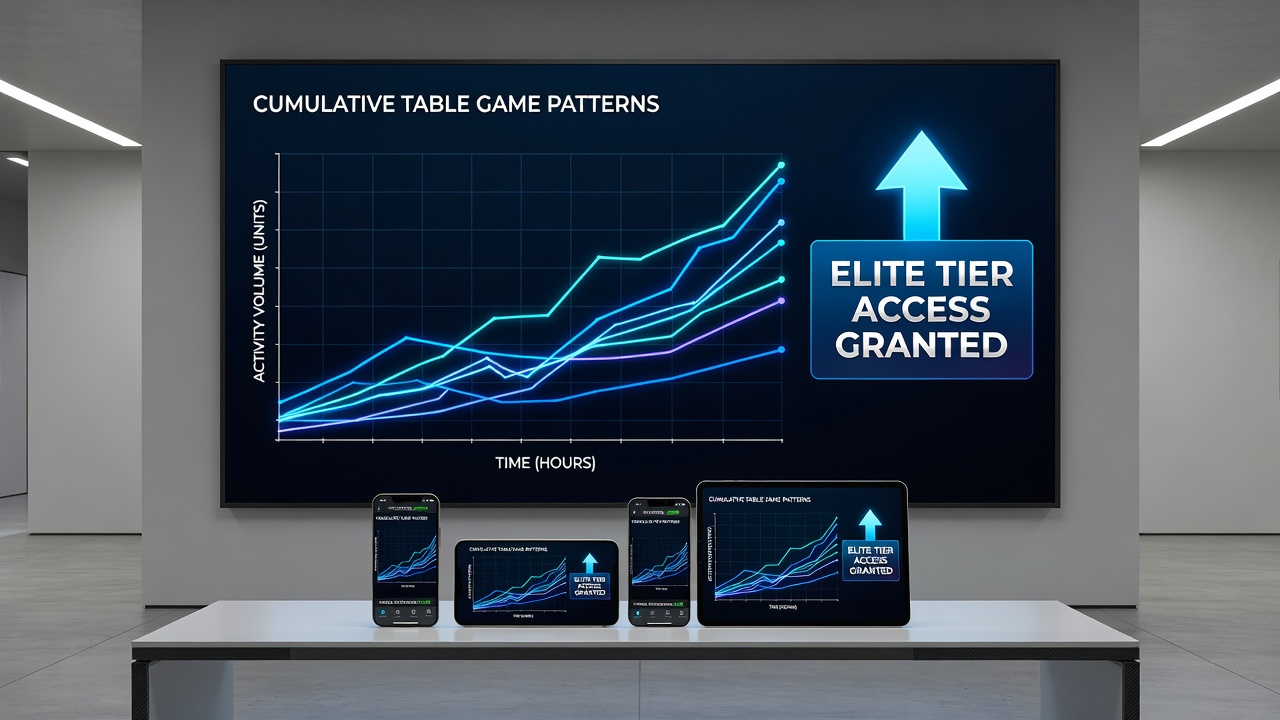
Algorithms examine sequences of table game decisions and outcomes to identify consistent engagement signals, then map those signals against predefined matrices that assign points toward elite status, and players who demonstrate sustained activity across multiple game types often accelerate their progression compared with those who focus on single titles. Data published by the American Gaming Association shows that loyalty systems incorporating table game pattern analysis recorded a 17 percent increase in tier upgrades during the first half of 2026. Separate figures from the Canadian Gaming Association reveal similar trends among operators serving both domestic and international accounts.
Borderless network infrastructure
Cloud infrastructure providers maintain regional nodes that exchange encrypted activity packets under agreements compliant with each participating jurisdiction's data residency rules, and these nodes reconcile cumulative totals whenever a player crosses regulatory boundaries or switches devices. The resulting system allows a single loyalty account to reflect play recorded in one market while a player participates from another, provided the operator holds the necessary licenses in both locations. Observers note that such architectures reduce duplicate record-keeping and enable operators to apply consistent elite-tier criteria across fragmented regulatory landscapes.
Regulatory and technical considerations
Regulators in multiple regions require operators to maintain audit trails that demonstrate how cumulative data influences tier decisions, and independent testing labs certify the algorithms used to convert pattern metrics into reward eligibility. A 2025 research paper from the University of Nevada, Las Vegas examined data-handling practices at five multi-jurisdictional operators and documented standardized logging procedures that satisfy both privacy statutes and gaming control requirements. Compliance teams routinely reconcile mobile feed logs against transaction records to verify that tier upgrades rest on documented activity rather than inferred behavior.
Network operators also implement rate-limiting and anomaly detection to prevent artificial inflation of pattern metrics, and these safeguards trigger manual review when cumulative scores deviate sharply from historical norms for a given account. Figures released by the European Gaming and Betting Association in mid-2026 indicated that fewer than 0.8 percent of tier evaluations required such intervention during the preceding twelve months.
Conclusion
Integration of synchronized mobile feeds with cumulative table game analytics continues to reshape how operators grant elite tier access, and the infrastructure supporting these processes operates under increasingly standardized technical and regulatory frameworks across borders. Data from 2026 shows measurable growth in upgrade volumes tied directly to pattern-based calculations, while audit and compliance mechanisms remain central to maintaining system integrity. Continued refinement of synchronization protocols and pattern recognition methods is expected as networks expand into additional markets.