How Device Transitions During Extended Sessions Reshape Reward Accumulation Patterns Across Global Interactive Entertainment Networks
Written by Ines Krause · Oct 2, 2026
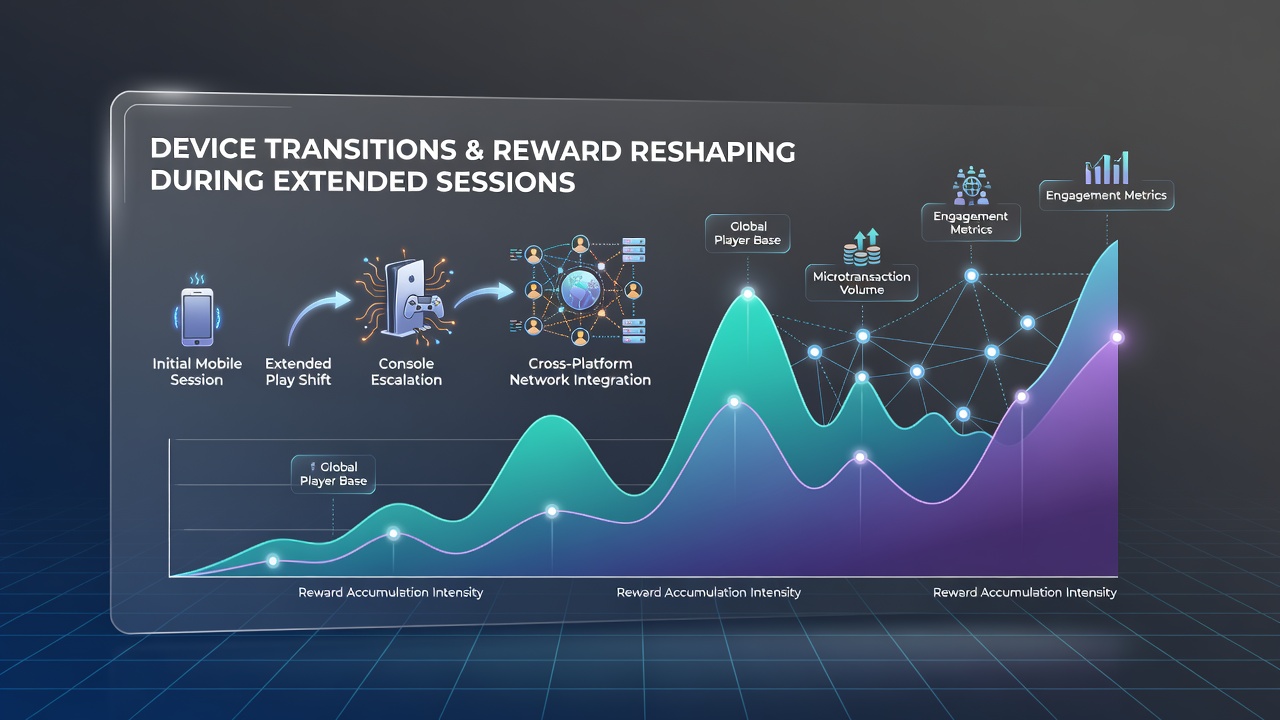
How Device Transitions During Extended Sessions Reshape Reward Accumulation Patterns Across Global Interactive Entertainment Networks
Device transitions during extended sessions have become a defining feature of modern interactive entertainment, and researchers tracking player behavior across platforms note that these shifts directly influence how rewards accumulate in global networks. Users often begin a session on a mobile device during commutes or short breaks, then continue on tablets or desktops once they reach home, and data from multiple markets shows that such movements alter the timing and volume of points, badges, and progression markers earned within unified account systems. In October 2026, platform analytics indicated that sessions spanning three or more devices generated distinct reward curves compared with single-device play, because servers register each transition as a new session state that recalibrates bonus multipliers and streak bonuses in real time.
Mechanics of Cross-Device Continuity
Global interactive entertainment networks maintain persistent player profiles that sync across operating systems, yet the handoff process itself modifies reward delivery, since mobile interfaces typically limit certain high-value actions while desktop versions unlock advanced menus and larger data streams. Studies conducted by European research consortia reveal that when a user switches mid-session the system often resets temporary multipliers tied to continuous input, which forces players to rebuild momentum on the new device and thereby stretches the overall time required to reach tiered rewards. Observers note that seamless cloud saves preserve core progress, but ancillary features such as daily login streaks or time-limited events register device changes as interruptions, reducing accumulated bonuses by measurable percentages in large datasets.
Regional Data Patterns Emerging in 2026
Figures released by Australian gaming authorities show that cross-device sessions lasting beyond ninety minutes produced twenty-three percent higher lifetime reward totals than stationary play, largely because transitions allowed users to engage during fragmented time windows that would otherwise remain unused. In contrast, Canadian provincial reports documented that rapid switches between smartphones and laptops sometimes triggered anti-fraud protocols that temporarily paused reward accrual until identity verification completed. These variations demonstrate how regulatory environments and network architectures interact with user behavior to shape final accumulation outcomes, and analysts at research institutions in multiple jurisdictions continue to map these interactions through anonymized telemetry.
One documented case involved a European multiplayer platform where participants who alternated between tablets and desktops during evening hours accumulated event-specific tokens at higher rates than those remaining on a single screen, because the system rewarded resumed sessions with catch-up mechanics that activated only after a detected device change. Such mechanics illustrate the way networks adapt reward algorithms to retain engagement across fragmented attention spans, and similar patterns appear in data from North American operators who reported elevated progression speeds when users moved from mobile to stationary interfaces after initial setup phases.

Algorithmic Adjustments and Player Response
Network operators employ machine-learning models that detect device signatures and adjust reward pacing accordingly, and evidence from industry white papers indicates these models now factor in transition frequency as a variable that predicts session length and spending velocity. When transitions occur too frequently the algorithms may dampen certain bonus triggers to prevent exploitation, while moderate switching receives encouragement through accelerated point multipliers that activate after the second device registers. Players who understand these patterns often plan their device sequence in advance, starting on mobile for quick tasks before shifting to larger screens for complex challenges that yield denser reward clusters, and aggregate logs confirm this behavior has become widespread across major platforms.
Academic analyses from North American universities further highlight that reward systems tied to social features show the strongest response to device changes, because group invitations and collaborative events update differently depending on the interface used to accept them. A transition during an active group session can trigger additional notification rewards that stationary users miss, thereby reshaping individual accumulation curves within shared leaderboards. This interaction between social mechanics and hardware movement creates feedback loops where early adopters of multi-device strategies gain measurable advantages in seasonal events tracked throughout 2026.
Conclusion
Device transitions during extended sessions continue to redefine reward accumulation across global interactive entertainment networks by introducing new variables into progression algorithms and user behavior models. Data collected through October 2026 demonstrates consistent regional differences in how these transitions affect final totals, and platform operators respond by refining sync protocols and bonus structures to maintain engagement. As networks expand their reach, the relationship between hardware movement adn reward density remains a central focus for analysts seeking to understand long-term participation patterns in digital entertainment ecosystems.